In the 1970s, plastic doors and windows emerged in Europe. Influenced by this, my country began to study the technology of plastic profile extrusion molds, but the development pace was still slow until the early 1980s. With the promotion and application of domestic chemical building materials, plastic profile extrusion molds technology developed rapidly in the 1990s. Due to the lack of design and mold trial experience, the processing equipment is primarily general machine tools, and the mold selection, heat treatment and surface treatment processes are backward, so the mold quality is low. In addition, people do not have enough understanding of plastic doors and windows, so they do not pay enough attention to molds, resulting in the slow development of mold technology in the early stage, so that in the mid-to-late 1980s, profile extrusion molds still mainly rely on imports.
Extrusion production lines and extrusion molds are imported in large quantities, which has attracted significant attention from many domestic scientific research institutions and enterprises. They have begun to pay enough attention to the research of molds and have made rapid progress in mold technology. The market share of domestic dies has also expanded rapidly. However, there is still a big gap between the design, manufacturing and trial of dies and those abroad, mainly manifested in low molding quality, low extrusion speed, many trial times and long delivery cycles.
With the vigorous promotion of chemical building materials, plastic profile extrusion molds, as one of its supporting technologies, have entered a period of rapid development. The State Economic and Trade Commission pointed out in the “Ninth Five-Year Plan for National Technological Innovation” that “it is necessary to improve the design and manufacturing level of plastic profile extrusion molds”, which has promoted a new leap in the research and production of plastic profile extrusion molds. A strong extrusion mold industry team has been formed in China, which has realized the localization of imported molds and developed them to a high level.
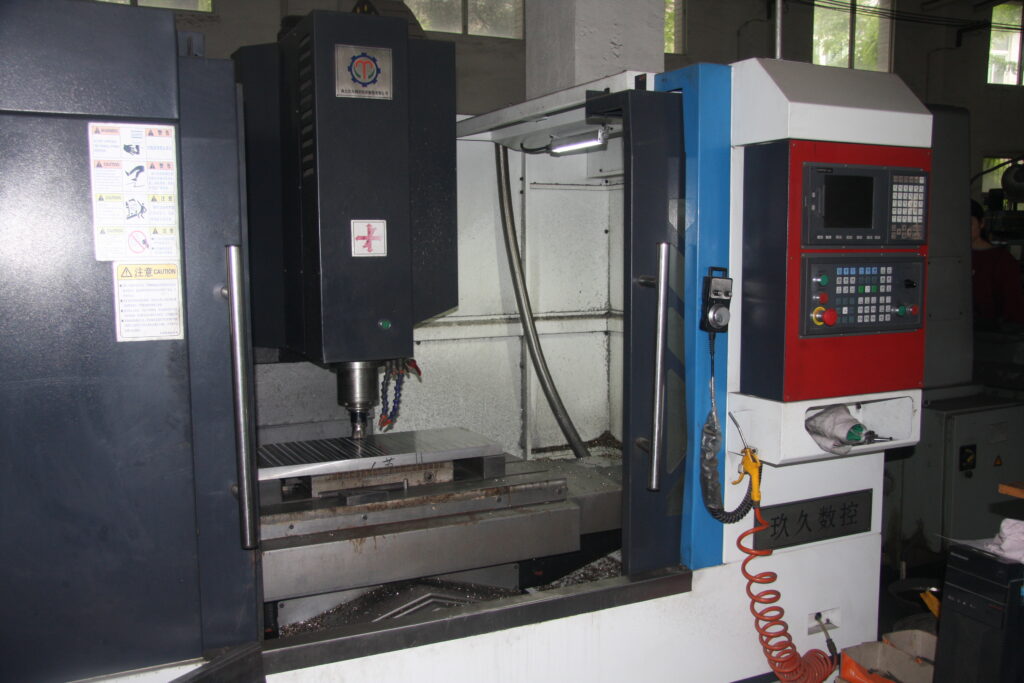
Driven by computer technology, high-speed CNC machine tools and new processes, plastic profile extrusion molds are developing from the traditional craft-based molding stage to a new stage of high-speed, automated, high-precision molding centered on computer technology. Quality has also improved significantly.
Another way to improve productivity is to use one-die multi-bundle extrusion technology. The domestic one-mold dual-bundle auxiliary profile extrusion mold has matured, and the one-mold four-bundle auxiliary profile extrusion mold has been successfully developed. A one-mold double-bundle main profile extrusion die will become one of the primary forms of high-efficiency production.
The mold shaping structure has developed to a new generation, a dry and wet mixed shaping structure that can achieve high-speed production. Typical examples include negative pressure spraying technology, negative pressure vortex technology in wet shaping structures, and energy-saving and efficient dry shaping mold structures. Domestic research in this area has achieved successful application. Co-extrusion molds with high technical content have also made significant progress. PVC-type two-colour co-extrusion molds, PMMA-type two-colour co-extrusion molds, and soft and hard co-extrusion molds have matured, and the development of foaming co-extrusion and inclusion co-extrusion molds has also made significant progress. With the development of molding process research, new extrusion molds emerge, such as imitation wood product extrusion molds and low-foaming profile extrusion molds, which have been successfully studied.
From the perspective of the mold industry, we can see that the technology of plastic profile extrusion molds has greatly improved from design manufacturing to mold testing. Mold design is gradually developing towards mature experience theory and theoretical knowledge systematization.
Computer-aided design. Good results have been achieved in CAD/CAM technology for plastic profile extrusion molds, and it is developing towards intelligent CAD/CAM. Improving the requirements for mold materials and heat treatment has made the molds have higher wear resistance and longer service life. With the development of CNC machine tools, some processing centers, special CNC machines and electrical processing equipment suitable for producing extrusion molds have reached a high level. Some companies are developing flexible manufacturing systems for plastic special-shaped extrusion molds and CIMS for plastic special-shaped extrusion molds. Research. The trial mold of plastic profile extrusion dies mainly relies on experience. On the one hand, some mold factories have begun establishing trial mold bases. On the other hand, they are conducting trial mold and mold repair research on computers through computer simulation analysis, and the number of trial molds has been significantly reduced.
At present, the promotion and application of some new technologies abroad are also being studied, such as new water spray facilities in wet setting spray devices, new post-coextrusion technologies, and new technologies for internal cooling of high-speed extrusion profiles.
In the future, the requirements for extrusion molds will become increasingly stringent, such as the development of high-performance extrusion molds with large extrusion volumes, high molding quality, low energy consumption ratio, excellent structure, and short delivery time. Therefore, the design, manufacturing, and trial mold technology of the mold must progress accordingly.