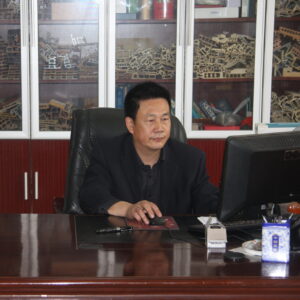
The time was around the year 2000. Mr. Duan Hailong, then the general manager of Lvke Company, approached Huangshi High-tech Mold Company to order a batch of WPC molds. At that time, such products did not exist in China—if they did, they were only at the laboratory stage. The company assigned the task of developing these new products to the technical department, which consisted of four technicians, including myself. I would like to take this opportunity to talk about my mentor, Mr. Guo Lishan, a senior engineer and one of the pioneers of plastic extrusion molds in China. I studied under him as his last disciple. He taught me many valuable methods that have stayed with me throughout my life. I am deeply grateful to this remarkable man.
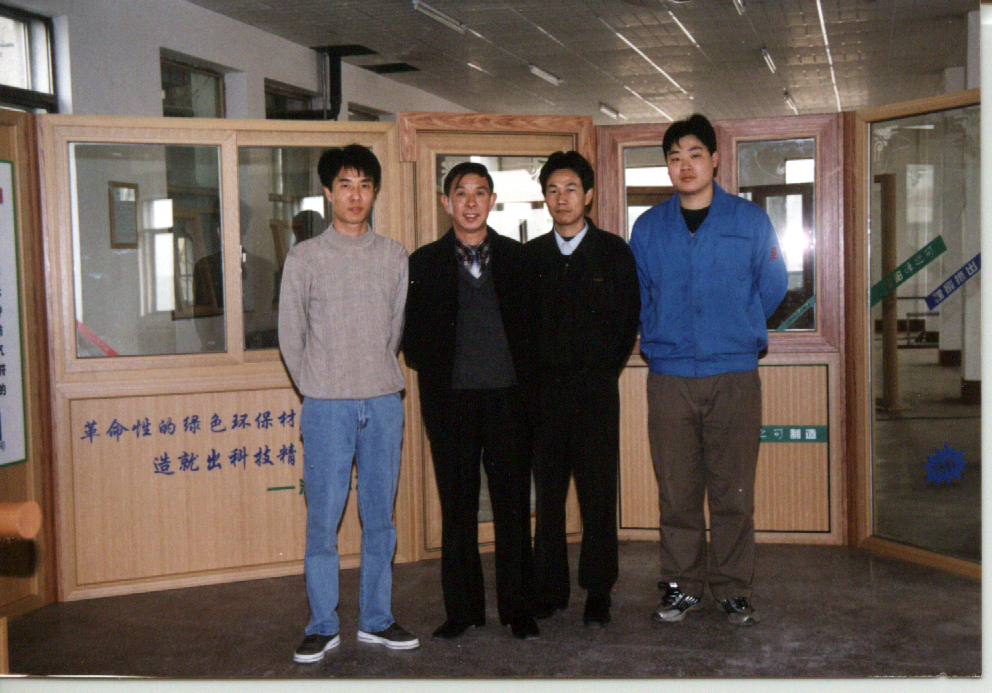
It requires extensive information and relevant experience. With many years of expertise in extrusion molds, we began cautiously exploring new territory. The first batch of molds was entirely designed based on the technical parameters used for plastic doors and windows. As a result, all these molds were scrapped, and none were usable. At that time, the testing involved equipment from Wuhan Plastic Machinery Company, molds from Huangshi High-tech Company, and raw materials imported from Singapore by Lvke Company. The plastic extrusion industry generally divides the entire process into several primary components: materials, methods, equipment, and molds. Throughout the testing process, the raw materials imported from Singapore were relatively mature, while the equipment and molds were still in the early stages of research and development. The first testing phase lasted several months, but ultimately, Lvke Company was unable to provide molds suitable for production.
After reviewing the experience from previous testing work, we resumed the development of the mold. First, we collected all relevant data related to foaming, PVC, and wood powder, including both domestic and international sources. In the process of gathering this information, I acquired a great deal of knowledge and found it highly beneficial. Subsequently, I communicated with the testing personnel to discuss the testing procedures and finalized the work plan. We then challenged many of the previous assumptions about manufacturing plastic door and window molds and gained a preliminary understanding of PVC combined with wood powder. The entire research and development process was quite challenging. We spent long hours daily in the testing workshop, experimenting, modifying, and experimenting again. During this time, we discovered the concept of crust foaming and understood how crusts form, including water crusts, oil crusts, and air crusts. We conducted numerous fundamental experiments and essential tasks, which have been invaluable to me throughout my life. Ultimately, we produced two or three sets of functional molds. We carefully analyzed the parameters of these molds and established a structural model for WPC foaming molds. This model laid the foundation for WPC mold development in China.
In 2001, Lvke Company showcased equipment capable of producing WPC products at an exhibition in Wuhan. I designed the mold for that equipment. The technology was trendy at the time, and many people were amazed that wood could be manufactured in this way. This event marked the first public unveiling of WPC products in mainland China, bringing them to widespread attention. From that point on, WPC products began to enter the Chinese market and gradually flourished nationwide. Lvke Company introduced WPC products to China!
Another crucial milestone in the development of this WPC extrusion mold occurred at the end of 2001, when Lvke Company’s first franchisee, Shenyang Lvke, was established. This company placed a single order for more than 40 molds, covering a wide range of plastic profile categories. After rigorously testing this batch of molds, I compiled comprehensive data from the entire testing process, conducted a detailed product analysis for each category, and developed a set of standardized production technical parameters. Since then, WPC extrusion molds have reached maturity.
The wheel of history turns forward, and the once-glorious Huangshi High-tech Mold Company has ceased operations. After losing their jobs, the former employees of Huangshi High-tech Mold Company began working hard to start their own businesses, leading to the emergence of a group of new mold companies. This is why there are now many mold companies in the Huangshi area.
Lvke Company produces WPC products using single-screw equipment. It leverages the inherent limitation of single-screw equipment—poor plasticization—by mixing several colors of granules and utilizing differences in their fluidity to naturally form a wood-like texture. This method is commonly employed by companies producing PVC ecological wood. The advantages of this production process include wood grain extrusion forming, a high degree of wood imitation, no need for surface treatment, and excellent environmental protection. However, the disadvantages are a complex production process, high production difficulty, large product inventory, and complicated color control across different product batches. In 2003, some visionary entrepreneurs recognized the market potential of WPC products, analyzed the shortcomings of single-screw equipment production, and began experimenting with twin-screw equipment to produce WPC products through one-step extrusion followed by secondary surface treatments such as wrapping, painting, or transfer printing. This secondary processing reduces production difficulty and significantly lowers production costs. This technological revolution has been a key factor in the rapid growth of the WPC industry in China.
With societal development, public awareness of environmental protection has increased. Decorative moldings made from density boards, which were once widely used, have gradually been rejected by the market. This shift has accelerated the development of WPC products. Derived from wood, WPC materials possess some characteristics that surpass those of natural wood, such as being waterproof, insect-resistant, and fire-retardant. They also share similar processing properties with solid wood, allowing them to be sawed, planed, and nailed. As a result, WPC products are now widely used in indoor accessories, including skirting boards, cabinets, wardrobes, bathrooms, and wardrobe doors.
Around 2012, a company in Zhejiang Province began producing wardrobe doors using WPC materials and later sought to apply them to walls. Our company was commissioned to develop a new type of WPC product. After its market launch, the product was highly praised by users for its rich colors, versatility, quick installation, and environmental friendliness. This product is the WPC wall panel.
Since I was first introduced to WPC products, I have developed a deep passion for them. I have devoted much of my energy to developing, improving, and diversifying molds for WPC products. For example, I have worked on WPC co-extrusion ASA, co-extrusion ecological wood foaming materials, co-extrusion PVC soft materials, and molds with dual outputs, including co-extrusion and thick, high-foaming PVC foaming molds. I have conducted in-depth research on various mold details, such as the cooling water channels in the molding sections. Initially, the cooling water circulated around the product in a loop to cool it, but this method lacked sufficient efficiency. Later, two approaches emerged: straight water channels and circulating water channels. The straight water channel runs parallel to the product’s production direction, while the circulating water channel runs perpendicular to it. Different products require different cooling methods, but I prefer the straight water approach. Straight water channels provide uniform cooling across the product’s cross-section, which helps avoid stress. In contrast, circulating water channels, if too long, cause temperature differences between the water inlet and outlet, resulting in uneven cooling and increased stress. I believe the cooling efficiency of WPC molds depends mainly on two factors: first, the larger the total cross-sectional area of the water channels in a single mold section, the greater the water flow rate, which removes more heat from the product, improving cooling and production efficiency; second, the shorter the water channel, the lower the outlet water temperature, which enhances product cooling and improves product quality.
I have been engaged in mold design for over 20 years and possess considerable experience. The principles that a good mold designer should adhere to are:
Customer use, stable production, high efficiency.
Easy use and maintenance.
Easy mold debugging.
Easy mold making.
A good mold must have high production efficiency, as this underpins all other benefits. A well-designed mold should be easy to operate and maintain. WPC molds require regular maintenance during long-term use. Neglecting maintenance will inevitably reduce production efficiency and may result in defective products. For example, if the water channels of the mold are not cleaned regularly, the heat exchange efficiency will decline; similarly, if the air vents are clogged, product molding will be incomplete, and surface flatness may be compromised. A skilled mold designer must consider mold testing during the design phase. Regardless of how perfect a mold appears, it is ineffective if the technician cannot properly adjust it. Continuous summarization of design experience is essential for a good mold designer. Typically, the mold structure is determined by the product specifications provided by the customer. Beyond the basic structure, many details require careful attention, such as pressure settings, the choice between internal or external flow channels, and whether to use circulating or direct water cooling. The more experience a designer has, the more optimized and practical the design solutions will be.
Technology is boundless. I will continue to advance in mold design, with the unwavering goal of providing customers with superior molds.